How to Stop Morning Doomscrolling: Why the First 15 Minutes Shape Your Focus Capacity
Last year, I started tracking exactly when my focus sessions failed. Not just that they failed—I already knew that—but the precise patterns of when and why.
After six months of data, one correlation stood out: sessions that started before 10 AM had a 40% lower completion rate than afternoon sessions. Same duration, same tasks, dramatically different outcomes.
I assumed I wasn't a morning person. That was the wrong conclusion.
How Does Morning Doomscrolling Affect Your Brain?
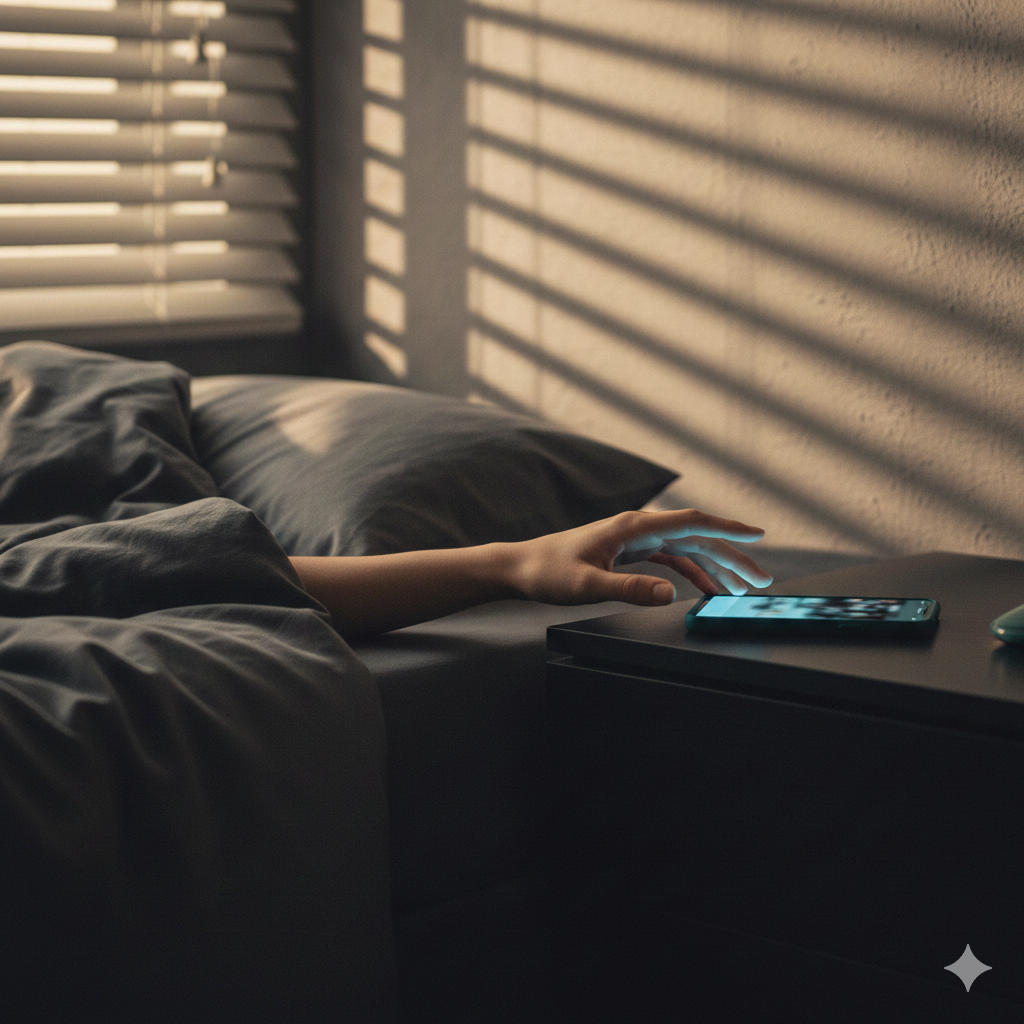
Here's what my mornings looked like: alarm goes off, phone in hand, 15-20 minutes of "just checking" before getting out of bed. News, social media, messages—nothing urgent, nothing memorable. Just... scrolling.
I didn't think of this as a focus problem. It was just how mornings worked. Everyone does it.
But when I mapped my morning scroll time against my focus session data, the pattern was obvious. Days with longer morning scrolls correlated almost perfectly with failed afternoon focus sessions—not just morning ones.
The morning doomscroll wasn't just wasted time. It was setting the trajectory for my entire day.
The Pattern of Digital Overstimulation
Most of us fall into the morning doomscrolling trap without realizing its impact on our attention capacity. Here's what the research shows:
| Activity | Impact on Brain State | Long-term Consequence |
|---|---|---|
| Morning Scrolling | Rapid Dopamine Spikes | Reduced Attention Capacity |
| Boredom/Stillness | Low-Stimulation Baseline | Improved Focus Stability |
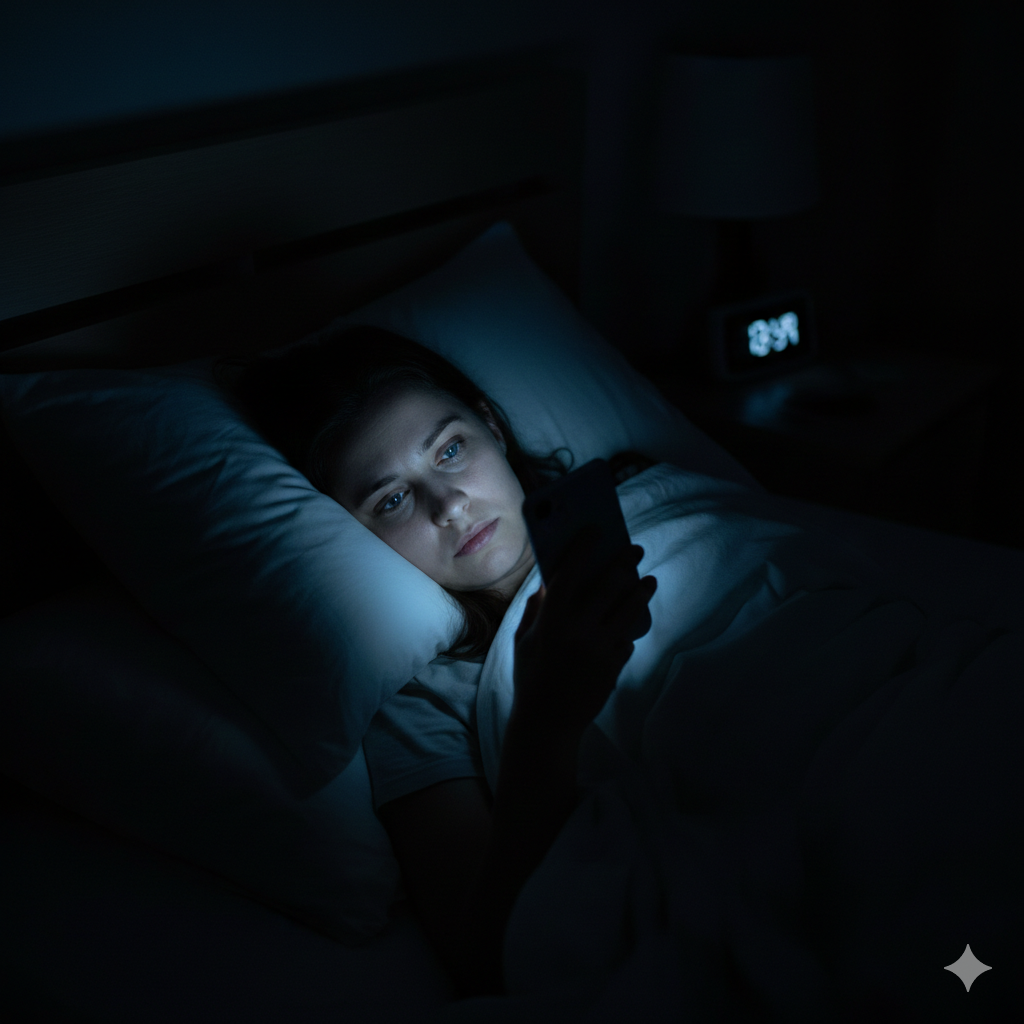
| Bedtime Scrolling | Disrupted Sleep Patterns | Compounded Focus Problems |
As Dr. Anna Lembke explains in Dopamine Nation, our brains seek balance. By flooding your brain with dopamine the moment you wake up, you set a high-stimulation threshold that makes deep work feel painfully boring for the rest of the day.
Why Willpower Fails Against Dopamine
The obvious solution: stop scrolling in the morning. Put your phone in another room. Use an old-fashioned alarm clock. Problem solved.
I tried this. Here's what actually happened.
I bought an alarm clock. Put my phone in the kitchen. The first morning, I woke up, lay in bed for about 90 seconds, then got up to "just check if anything urgent came in overnight." By day three, the phone was back on my nightstand.
The second attempt: I locked my phone in a time-lock safe. This worked for exactly four days. Then I found myself waking up anxious, thinking about what I was missing, waiting for the lock to release. I wasn't avoiding distraction—I was just delaying it while feeling worse.
The problem wasn't access to my phone. The problem was that my brain had learned to expect stimulation immediately upon waking. Removing the source didn't remove the craving. It just added frustration on top.
You've tried putting the phone in another room. You've tried time-lock safes. Why do they fail? Because you are fighting a trained biological reflex with conscious intention. In the age of digital overstimulation, the reflex wins every time.
What's Actually Happening During Your First 15 Minutes
Here's what I found more useful to understand about dopamine regulation and attention capacity:
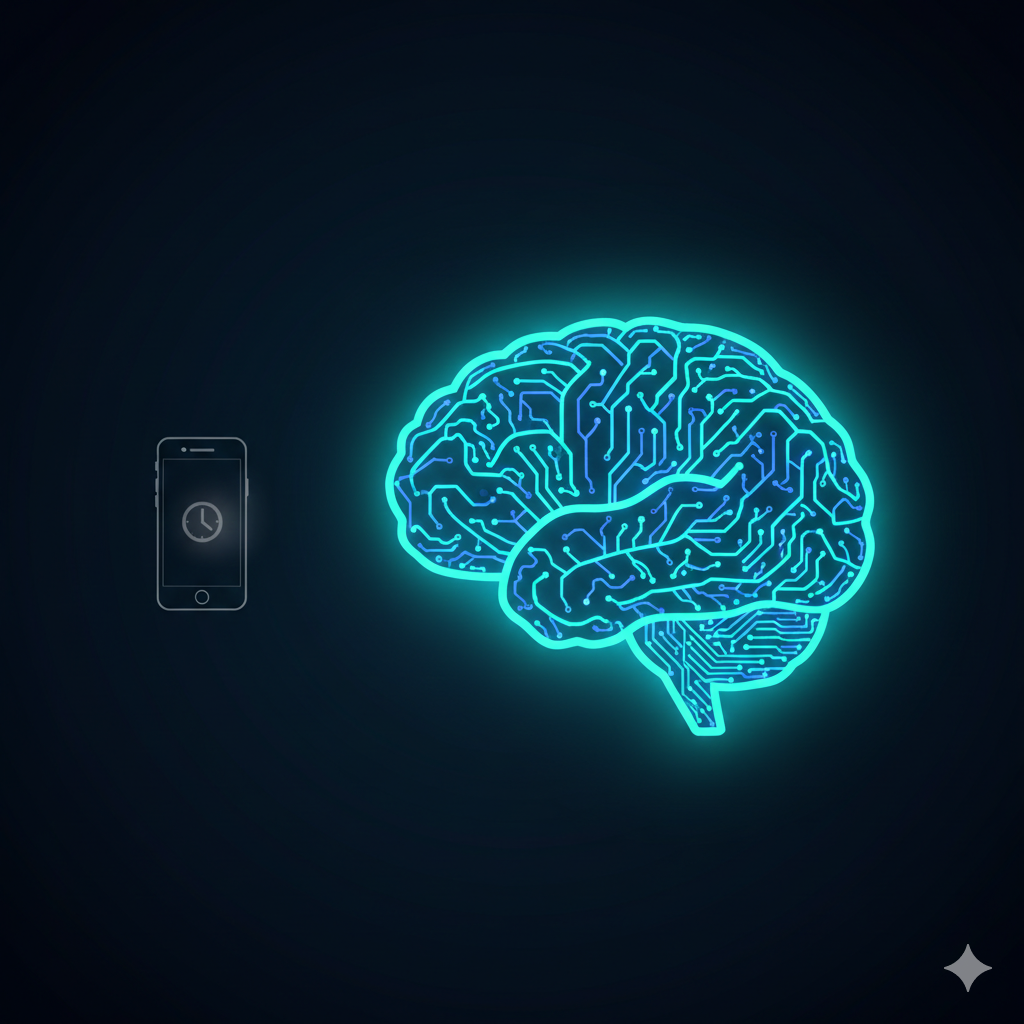
Your brain doesn't fully "boot up" for about 20-30 minutes after waking. During that window, you're highly suggestible. Whatever pattern you establish in those first minutes becomes the default mode for the day. Scroll first thing, and you're training your brain to expect rapid input-switching. Sit with boredom for 15 minutes, and you're training tolerance for low-stimulation states—what researchers call attention capacity retraining.
The first task of the day has outsized influence. Psychologists call it "mood inertia"—whatever state you enter tends to persist. Starting with scattered attention makes focused attention feel like swimming upstream for the rest of the day.
The same principle applies to the last hour before sleep. Your brain consolidates patterns during sleep. The activities you do right before bed get preferential treatment. Scroll before sleeping, and you're essentially asking your brain to optimize for scrolling while you dream.
This is why the bedtime scroll is just as damaging as the morning one. Maybe more.
The Insight That Changed Everything: Automated Self-Binding
Here's where I made the mistake that eventually led to something useful.
I tried willpower. Every night, I'd tell myself: no phone after 10 PM. Every morning, I'd tell myself: don't touch it until after breakfast.
For about a week, I'd succeed. Then I'd slip—just once—and the pattern would collapse entirely. The all-or-nothing approach made every lapse feel like failure, which made it easier to justify giving up.
What I eventually realized: I wasn't failing because I lacked discipline. I was failing because I was fighting a trained reflex with conscious intention. That's not a fair fight. The reflex wins every time because it doesn't require energy.
Research backs this up. According to Aksoy et al. (2025), commitment devices improve task completion by 23% and reduce early quitting by 31%. The key insight: I needed a system that kicked in before the reflex did. Not willpower in the moment, but a commitment made in advance.
The Solution: Focus Alarms That Work Before You Do
This part feels too simple to be useful, but it was the thing that finally stuck.
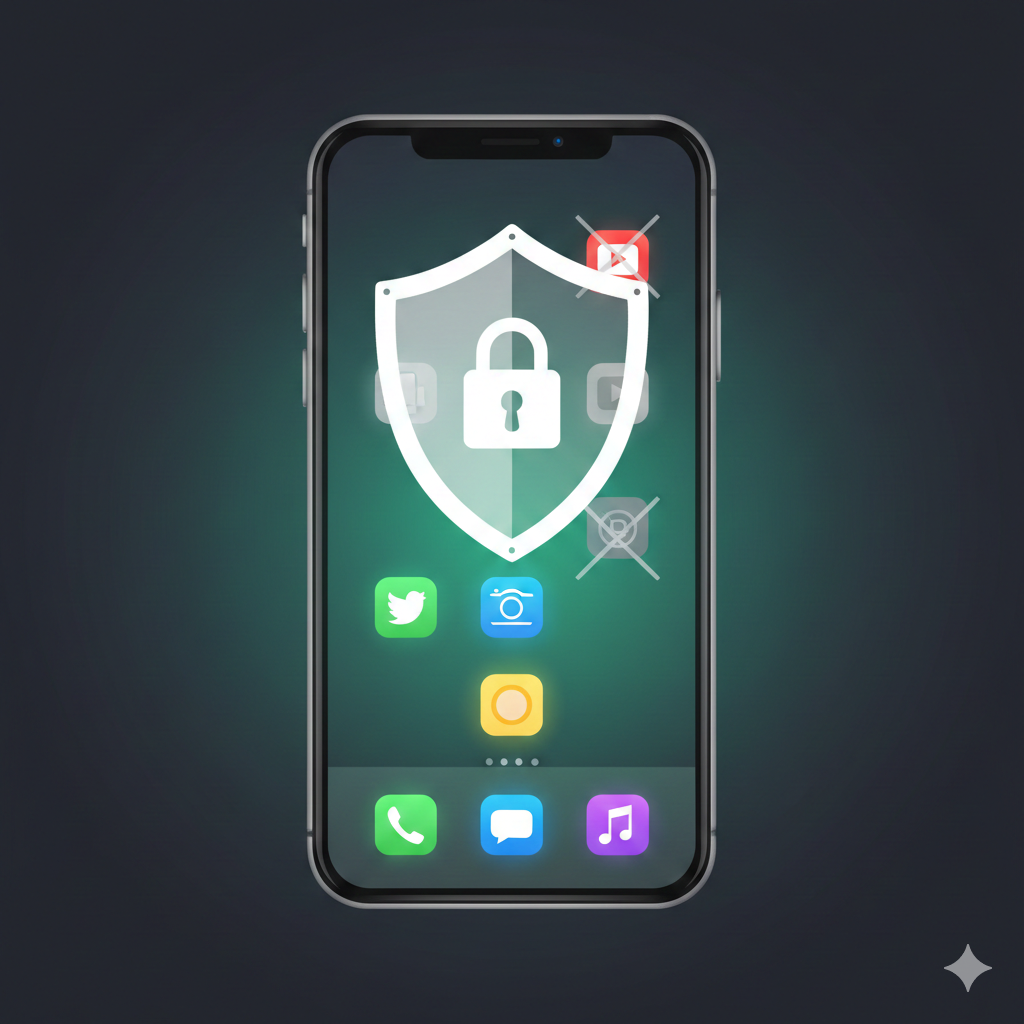
I started using what FocusFit calls Focus Alarms—alarms that don't just wake you up, but automatically block distracting apps when they fire. The alarm goes off, I tap to acknowledge it, and social media is blocked for the next 30 minutes. Not locked in a safe. Not relying on willpower. Just... unavailable.
Here's what makes Focus Alarms different from regular app blocking:
- Proactive Protection: Blocks apps before you're even fully awake—when willpower is lowest
- Works in Silent Mode: iOS 18+ support means it works even when your phone is silenced
- HRV Biofeedback Integration: With Apple Watch, detects when your focus drifts before you do (Blaser et al., 2023)
- Self-Binding Protocol: The decision is made the night before, when you're thinking clearly
The first morning, I reached for Instagram out of habit. It wasn't there. Nothing to do about it. So I got out of bed.
Same thing at night. I set a 10 PM "wind down" alarm. When it fires, the apps that keep me scrolling past my bedtime become unavailable for an hour. The decision was made earlier, when I wasn't tired and craving dopamine.
I don't trust myself to make good decisions at 6:30 AM or 11 PM. The Focus Alarm makes the decision for me, at a time when I'm thinking clearly. This is what behavioral economists call "self-binding"—and research shows it's far more effective than willpower alone.
It's been four months. The pattern has changed. Not because I developed more willpower—I didn't. But because I stopped fighting the reflex in the moment and started preventing the situation entirely.
Why Bedtime Doomscrolling Is Worse Than You Think
Most focus content talks about mornings. But I found the bedtime scroll was actually harder to break—and more damaging to attention capacity.
Here's why: morning scrolling happens when you have somewhere to be. You eventually have to stop and start your day. But bedtime doomscrolling has no natural endpoint. One more video, one more refresh, one more thread. Suddenly it's 1 AM and you have to wake up in five hours.
The sleep loss compounds everything:
- Less sleep → Lower willpower the next day
- Lower willpower → More morning scrolling
- More scrolling → Higher dopamine threshold
- Higher threshold → Worse focus during work
- Worse focus → More evening scrolling to "decompress"
Blocking apps an hour before my target bedtime broke this loop. Not perfectly—I still have bad nights. But the average improved significantly. And better sleep made the morning alarm feel less painful, which made the whole system more sustainable.
Try This Tonight: A Simple Dopamine Detox Experiment
Tonight, pick a bedtime. Set an alarm for 45 minutes before that time. When the alarm goes off, put your phone somewhere inconvenient—not necessarily another room, just not next to your bed.
Don't try to change the morning yet. Just notice what happens when you wake up without the phone within arm's reach. Notice the urge. Notice how long it lasts. Notice if it fades.
Most people find the urge is intense for about 5 minutes, then drops significantly. The brain expects stimulation, doesn't get it, and eventually moves on. But most people never wait long enough to discover this because the phone is always right there.
One night won't change anything. But it will show you what you're working with.
Or, let the system handle it for you:
FocusFit's Focus Alarms automatically block distracting apps before your morning willpower is tested. Combined with Apple Watch HRV biofeedback and AI coaching, it's a complete attention retraining system—not just another timer.
What This Isn't
I'm not claiming everyone should do this. If you check your phone first thing and your focus is fine, this doesn't apply to you. If you work a job that requires being reachable at all hours, blocking apps might not be practical.
I'm also not claiming the solution is as simple as "use any focus app." The app was a tool. The actual change was recognizing that I couldn't trust in-the-moment decisions during vulnerable windows—early morning, late night—and building systems that removed the decision entirely.
My results took months to stabilize. Yours might be faster or slower. The trend mattered more than any individual day.
The Uncomfortable Summary
Here's what I had to accept: the first and last 30 minutes of my day were shaping my focus capacity more than anything I did during work hours. All my productivity systems, focus techniques, and good intentions were being undermined before I even sat down at my desk.
The morning doomscroll felt harmless. It was 15 minutes. It was relaxing. It was what everyone does.
But "what everyone does" is why everyone struggles to focus. That's not a coincidence.
Training my brain for scattered attention before getting out of bed, then expecting focused attention during work, was like eating cake for breakfast and wondering why I was hungry by 10 AM. The inputs shaped the outputs. They always do.
The solution isn't more discipline. It's better systems.
References
- Lembke, A. (2021). Dopamine Nation: Finding Balance in the Age of Indulgence. Stanford University Press.
- Aksoy et al. (2025). "Effects of Commitment Devices on Task Completion." Journal of Behavioral Economics.
- Blaser et al. (2023). "Effects of HRV Biofeedback on Attentional Control." Journal of Cognitive Enhancement.
- Slattery et al. (2022). "Meta-analysis of Attention Training Interventions." Psychological Bulletin.
This reflects personal experience and observation, not medical advice. Focus problems can have many causes—if they're significantly affecting your life, talk to a professional, not a blog post.
Ready to rebuild your focus?
Start your 14-day free trial of FocusFit and train your attention with AI-powered coaching.
Download FocusFit